
Dimmable LED Drivers: TRIAC, 0-10V, DALI — Match the Right One to Your Project
“Dimmable” is not one spec — it’s three different protocols that are not interchangeable. Shipping the wrong dimming standard is one of the most common return reasons in wholesale lighting: the fixture works fine, but it won’t dim, or it flickers, because it doesn’t speak the same language as the buyer’s switch or control system. Here’s how dimmable LED drivers actually differ, and how to spec the right one.
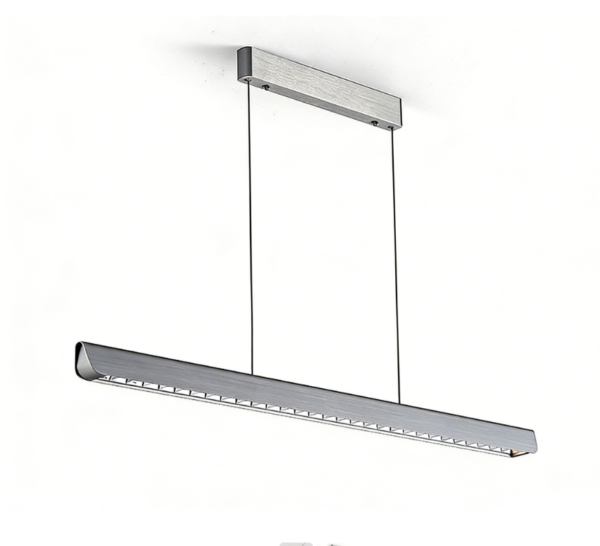
01 · Why the Dimming Protocol Matters More Than the Wattage
Two dimmable fixtures can have identical wattage, CCT, and lumen output and still be completely incompatible with each other’s control setup. That’s because “dimmable” describes how the driver talks to the control signal — not how bright the light gets. Mismatch the protocol and you get one of three outcomes: no response at all, visible flicker at low brightness, or a narrow, unusable dimming range that stops well short of full dark. This is why choosing between dimmable LED drivers is really a wiring question first and a brightness question second.
For wholesale buyers, this is a sourcing question as much as a technical one: the protocol has to match what’s already installed at the project site, or what the electrician has specified.
02 · TRIAC Dimming: The Retrofit-Friendly Option
TRIAC dimming works over the existing two-wire mains cable — the same wiring used for a standard incandescent dimmer switch. This makes it the default choice for residential retrofits, where running new low-voltage control wiring isn’t practical, and it’s the most widely stocked category of dimmable LED drivers for that reason.
| Attribute | Detail |
|---|---|
| Wiring | Standard 2-wire mains, no separate control cable |
| Compatible switch | Leading-edge or trailing-edge wall dimmer |
| Best for | Residential retrofit, hotel guest rooms |
| Common weakness | Flicker or buzz at low brightness if switch/driver aren’t matched |
03 · 0-10V Dimming: The Commercial Standard
0-10V dimming uses a separate low-voltage control cable running alongside the mains wiring. A control signal between 0 and 10 volts sets the brightness — 10V for full output, 0V (or 1V on many drivers) for minimum. It’s simpler and cheaper than DALI, and it’s the default in most commercial ceiling and office lighting projects.
| Attribute | Detail |
|---|---|
| Wiring | Mains + separate 2-wire low-voltage control line |
| Compatible switch | 0-10V dimmer, building automation controller, or daylight sensor |
| Best for | Offices, retail, warehouses, new-build commercial projects |
| Common weakness | Requires control wiring to be planned before installation |
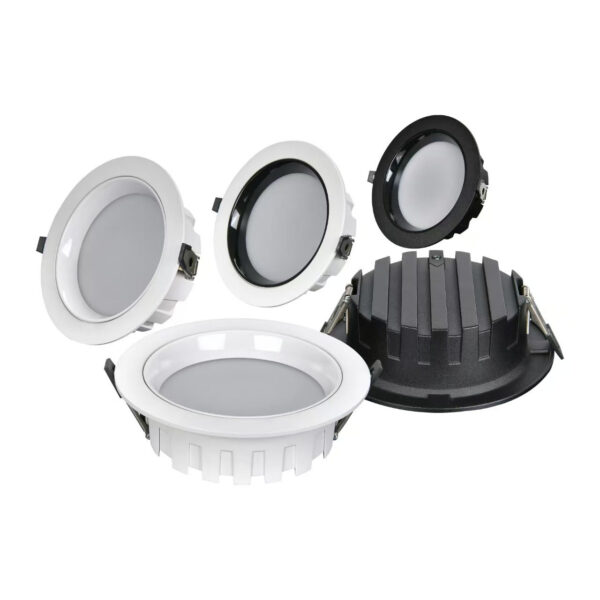
Fixtures like our full-spectrum eye-care LED ceiling light and our anti-glare recessed LED downlight are commonly specified with 0-10V drivers for commercial-project orders, since most office buildings already run 0-10V control lines to the ceiling grid.
04 · DALI: Addressable, Smart-Building Grade Dimmable LED Drivers
DALI (Digital Addressable Lighting Interface) is a two-way digital protocol — each fixture has its own address, so a controller can dim, group, or query individual lights rather than treating a whole circuit as one dimming zone. It costs more per fixture but is the standard for smart buildings, hospitality chains, and any project where lights need to be zoned, scheduled, or integrated with a building management system.
05 · Side-by-Side Comparison
| Protocol | Wiring Complexity | Per-Unit Cost | Best Fit |
|---|---|---|---|
| TRIAC | Low — reuses mains wiring | $ | Residential retrofit |
| 0-10V | Medium — separate control cable | $$ | Commercial, new-build |
| DALI | Higher — addressable network | $$$ | Smart buildings, hospitality |
06 · Matching the Protocol to the Project
| Project Type | Recommended Protocol |
|---|---|
| Residential remodel / retrofit | TRIAC |
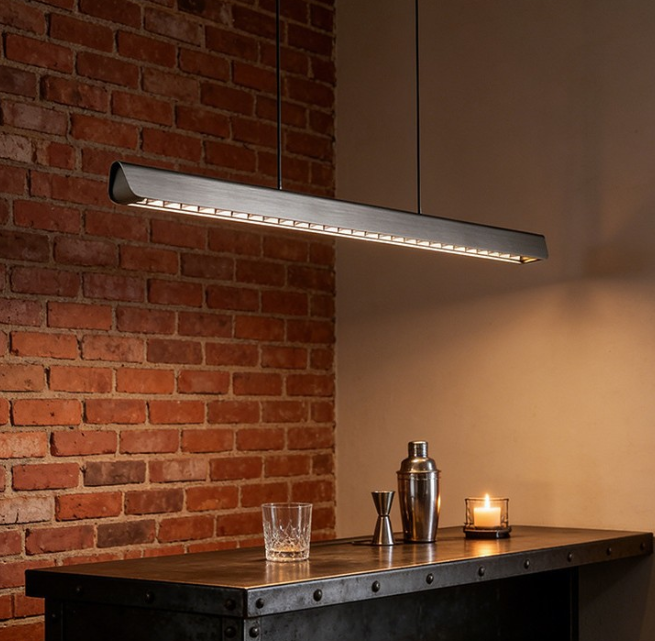
| Wall lights & pendant lights, residential | TRIAC (most common) |
| Ceiling fan lights, residential retrofit | TRIAC (most common) |
| Office / retail new-build | 0-10V |
| Hotel corridors, meeting rooms | DALI |
| Smart building / BMS-integrated | DALI |
07 · A Quick Sourcing Checklist
- Ask the buyer which protocol the site’s switches or control system already use
- For TRIAC: request a tested compatibility list against common dimmer brands in the destination market
- For 0-10V: confirm the driver’s minimum dim level (1% vs 10%) — matters for hospitality mood lighting
- For DALI: confirm DALI-2 certification, which guarantees independently-verified cross-brand interoperability
- Always request a driver datasheet, not just a “dimmable” label on the box
08 · Final Takeaway
The wattage and color temperature are the easy part of a lighting spec. The dimming protocol is where orders actually go wrong, because it has to match equipment the buyer already owns or has already wired. Confirming TRIAC, 0-10V, or DALI upfront — before quoting, not after shipping — is the single fastest way to cut return rates on dimmable LED drivers in wholesale orders. Whichever protocol you settle on, matching the right one of these dimmable LED drivers to the site is what keeps the order out of the returns pile.
Need a specific dimming protocol for your project?
We stock TRIAC, 0-10V, and DALI-compatible drivers across our ceiling, wall, pendant, and downlight collections.
Browse All Products →